|
© Eric R. Pianka 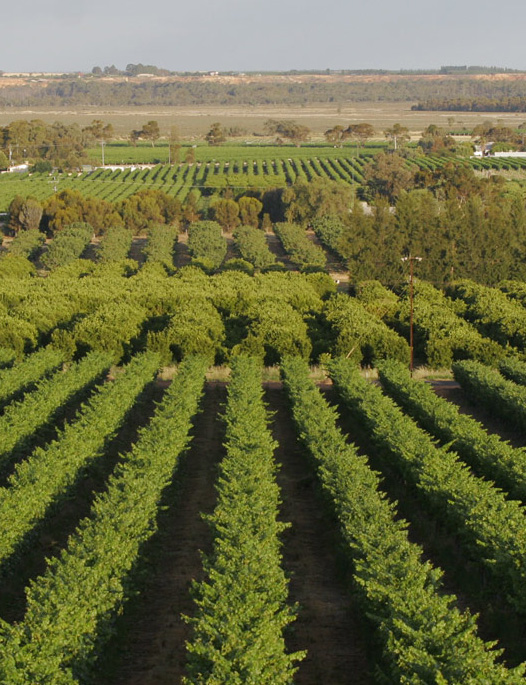 Until the advent of agriculture about 10,000 years ago, humans were
hunter gatherers -- many fewer of us existed. Food supplies lead population --
populations increase to the level that foods will allow. Agriculture
has been called one of the
worst mistakes humans ever made because it allowed us to increase in
population density, ultimately leading to the present day overpopulation crisis.
Until the advent of agriculture about 10,000 years ago, humans were
hunter gatherers -- many fewer of us existed. Food supplies lead population --
populations increase to the level that foods will allow. Agriculture
has been called one of the
worst mistakes humans ever made because it allowed us to increase in
population density, ultimately leading to the present day overpopulation crisis.
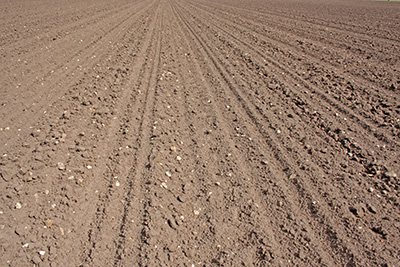
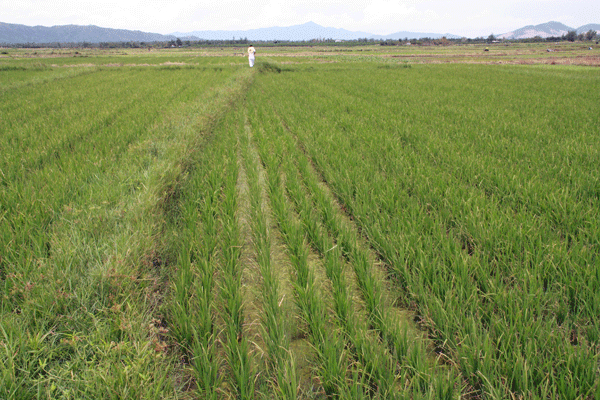
We could never have reached 7 billion without fossil fuels. Basically, humans exploited these one-time fossil energy reserves to demolish many of Earth's natural ecosystems and turn them into arable land and crops to feed increasing numbers of people. 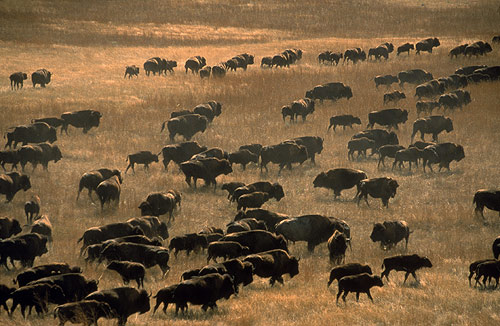
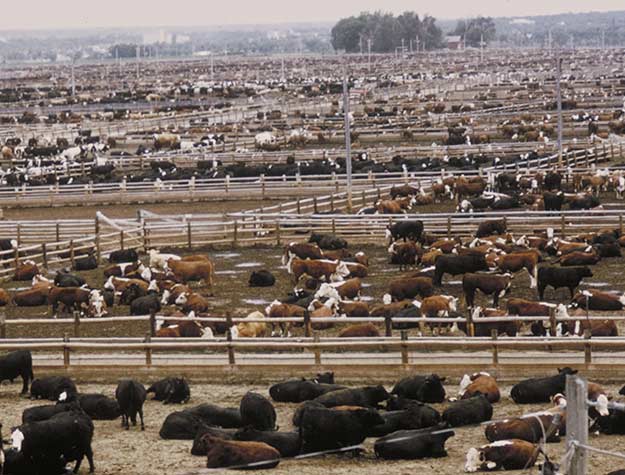
We replaced the tall grass prairies of North America with fields of corn and wheat and turned bison herds into cattle, ultimately into masses of humanity. Without agriculture, we could never have built cities, let alone our civilization and human knowledge. However, in many ways cities are giant but fragile and unsustainable feed lots for unnaturally dense aggregations of humans. 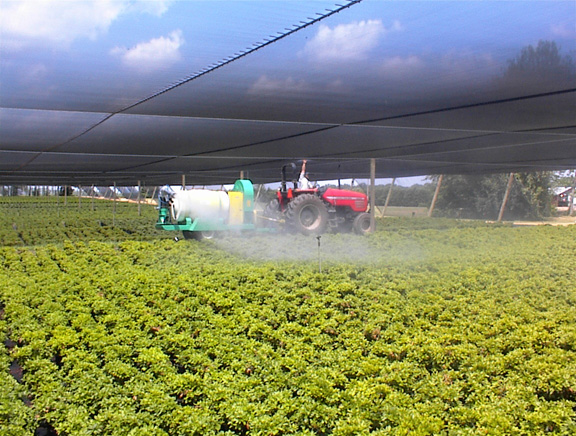

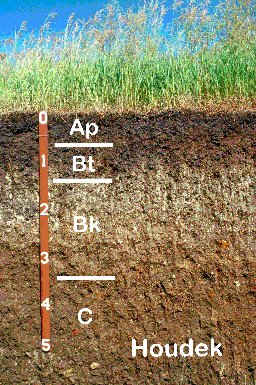 The deep black topsoils of the prairies made America a 'bread basket' for the world,
allowing us to export grains to less fortunate peoples in other parts of the world without
access to such amenable climates and rich soils. Sustained agriculture depletes the
nutrient pools of soils -- in order to maintain production, soils must
be fertilized with nitrogen and phosphorus and other minerals.
Animal wastes such as bat and bird guano were used as fertilizers
until they began to be depleted. Then, just as such natural fertilizers
were running out, the
Haber-Bosch process
was discovered, which
allowed natural gas to be burned to turn inert atmospheric nitrogen into ammonia fertilizer.
Without this technological breakthrough, human populations would have become limited by food
supplies long ago and at much lower population densities. The advent of these inexpensive
fertilizers has encouraged overuse resulting in massive
nitrogen pollution. Eventually, we will exhaust finite
natural gas supplies. This technology has lured us out on to thin ice, and we now must face
population overshoot (Catton 1982). Sadly, our enormous population, now well above the level
Earth can support, must soon crash, accompanied by famines and massive human misery.
The deep black topsoils of the prairies made America a 'bread basket' for the world,
allowing us to export grains to less fortunate peoples in other parts of the world without
access to such amenable climates and rich soils. Sustained agriculture depletes the
nutrient pools of soils -- in order to maintain production, soils must
be fertilized with nitrogen and phosphorus and other minerals.
Animal wastes such as bat and bird guano were used as fertilizers
until they began to be depleted. Then, just as such natural fertilizers
were running out, the
Haber-Bosch process
was discovered, which
allowed natural gas to be burned to turn inert atmospheric nitrogen into ammonia fertilizer.
Without this technological breakthrough, human populations would have become limited by food
supplies long ago and at much lower population densities. The advent of these inexpensive
fertilizers has encouraged overuse resulting in massive
nitrogen pollution. Eventually, we will exhaust finite
natural gas supplies. This technology has lured us out on to thin ice, and we now must face
population overshoot (Catton 1982). Sadly, our enormous population, now well above the level
Earth can support, must soon crash, accompanied by famines and massive human misery.
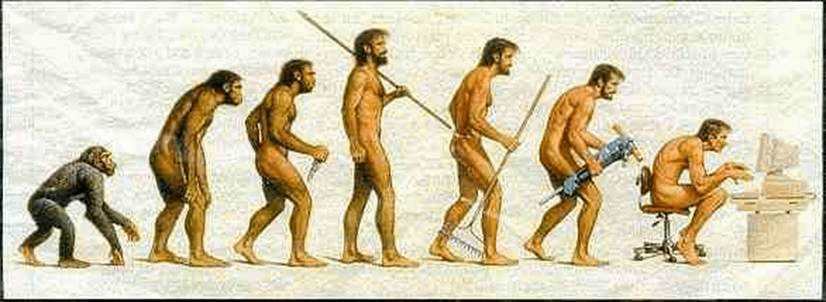
Paleopathology is the study of signs of disease in the remains of ancient peoples. A skeleton reveals its owner's age, sex, and weight. A population of skeletons can be used to construct mortality tables and to estimate expected life span and risk of death at any given age. Growth rates can be estimated by measuring bones of people of different ages, and teeth can be examined for enamel defects (signs of malnutrition). Scars left on bones reveal injuries as well as various diseases. The average height of hunger-gatherers at the end of the ice ages was 5' 9" for men and 5' 5" for women. Following the adoption of agriculture, heights crashed, and by 3000 B. C. statures had reached a low of only 5' 3" for men and 5' for women. A detailed study of 800 American Indian skeletons from burial mounds in Illinois and Ohio river valleys illustrate health changes that occurred around A. D. 1150 when a hunter-gatherer culture gave way to intensive maize farming (Diamond, 1987). Compared to hunter-gatherers who preceded them, farmers had nearly twice as many enamel defects indicative of malnutrition, four times as much iron-deficiency anemia (evidenced by a bone condition), a threefold rise in bone lesions reflecting infectious disease, and an increase in spinal degenerative conditions, a reflection of hard physical labor. Life expectancy at birth decreased from 26 years to only 19 years. Agriculture was bad for health for several reasons. Hunter-gatherers enjoyed a more varied diet than early farmers, whose foods consisted of a few starchy crops. Farmers obtained cheap calories, but at the cost of poor nutrition. (Three carbohydrate rich plants -- wheat, rice, and corn -- provide the bulk of the calories consumed by humans today, yet each is deficient in certain essential amino acids or vitamins.) Due to their dependence on a limited number of different crops, farmers ran the risk of starvation if one crop failed. Because agriculture encouraged people to clump together in crowded societies, which then traded with other crowded societies, parasites and infectious diseases spread. Agriculture also led to cities -- the invention of money allowed the wealthy elite to control poorer people and to live better. Runaway greed fostered inequality as the rich grew richer at the expense of the poor. Women were exploited as baby bearers and beasts of burden. Agriculture has thus cursed us with disease, despotism, economic depressions, revolutions, social and sexual inequality, starvation, tyranny, and warfare (Diamond, 1987). Watch ERP's "Domino Effects" (6.5 minutes) Catton, W. R. 1982. Overshoot. The Ecological Basis of Revolutionary Change. University of Illinois Press. Excerpt Diamond: The Worst Mistake in the History of the Human Race Pianka, E. R. 2012. Can humans share spaceship earth? ("Point of View") Amphibian and Reptile Conservation 6(1): 1-24(e49) |