
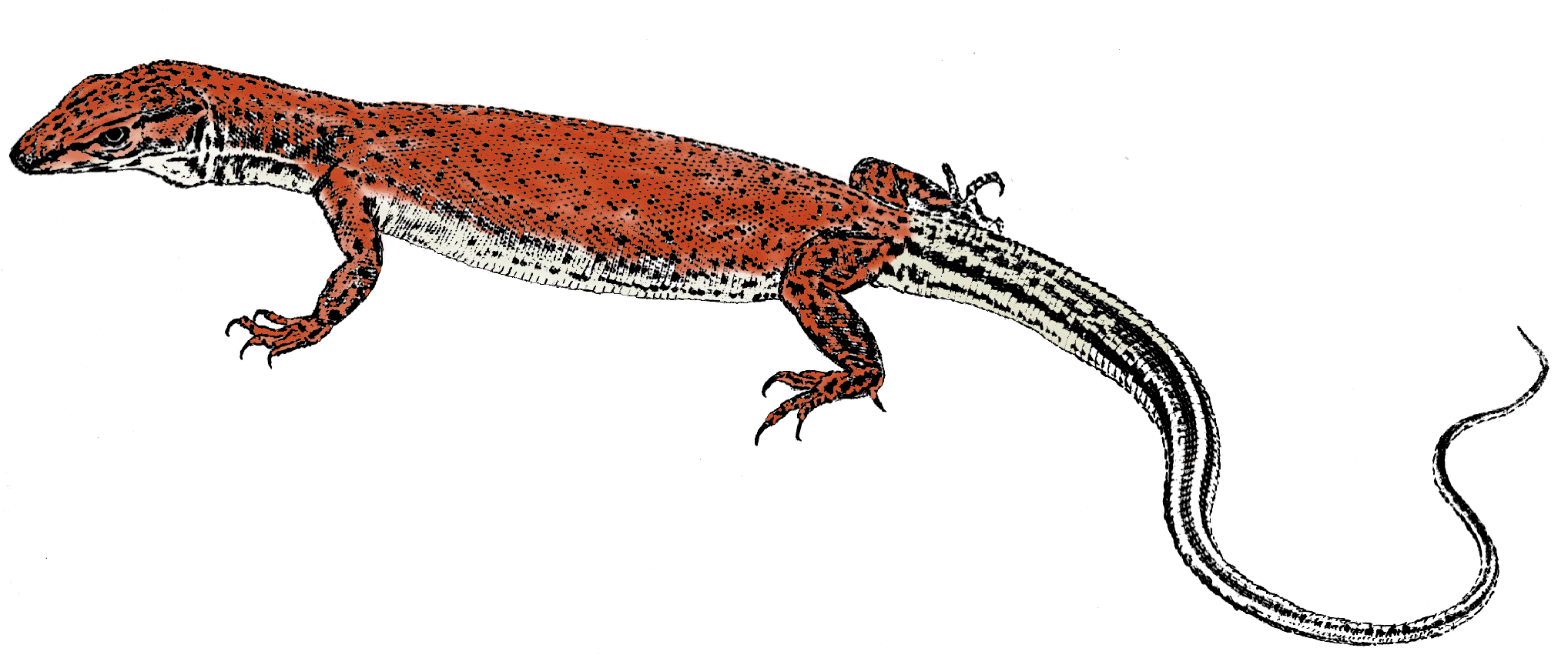
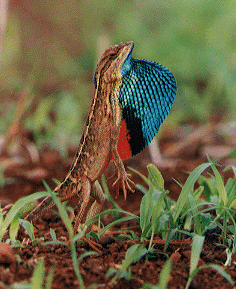
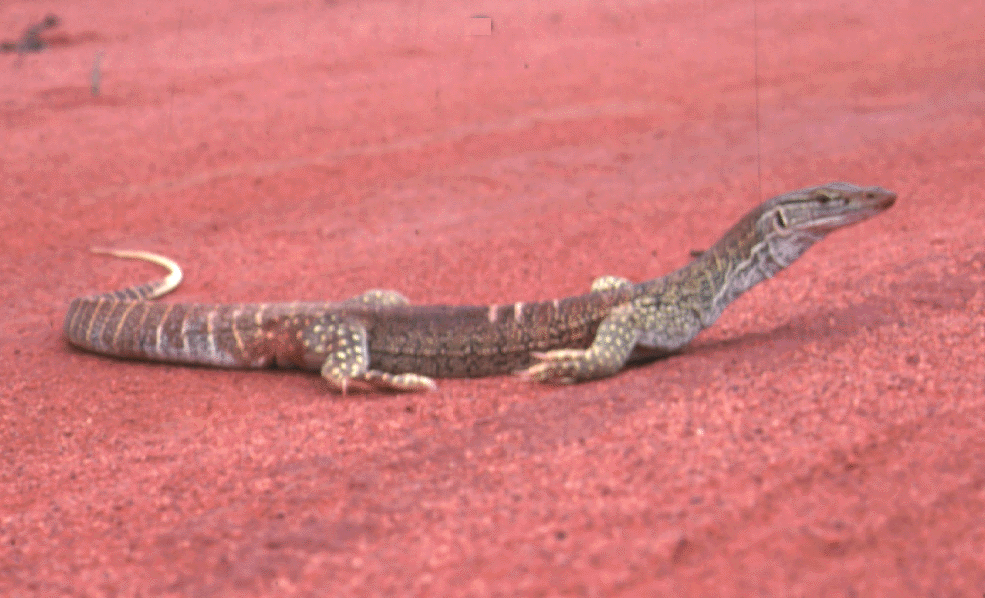
 To learn more about this Australian desert lizard, click on it. Biology 357: Evolutionary Ecology -- Fall 2013 
Email Address: erp@austin.utexas.edu) Office Hours: Pat 125, Monday 1-2, Friday 1-2 or by appointment (471-7472 or email)
Download Syllabus Student Evaluations of some past 357 classes but can be used by students for study groups 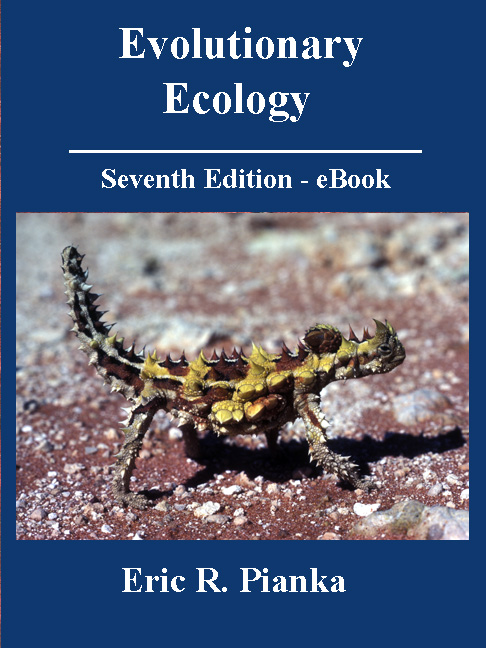 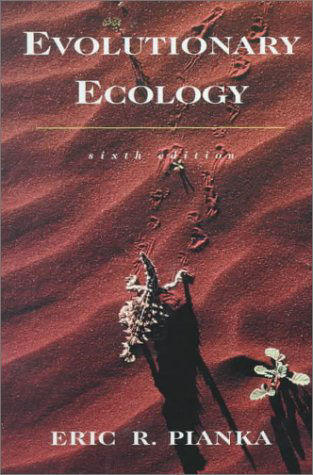
Text: Pianka, Evolutionary Ecology, 6th or 7th ed.
Sixth Edition out of print but still available
Seventh Edition - eBook
Read Chapter 1 and Chapter 8
Or Read On Line at Blackboard (Course Documents)
Please read the following essays:  Spaceship Earth
Nee's "The Great Chain of Being", Nature Spaceship Earth
Nee's "The Great Chain of Being", Nature
 Klinkenborg's "Depth of Time", NY Times
Morrison's "Evolution's Problem Gamblers"
Scientific Methods
Natural Selection
Human Instincts
Our Hunter-Gatherer Heritage
Population Growth
Evolution of Uncaring Humanoids
Can humans share spaceship earth?
Why Can't We Humans Share Spaceship Earth?
The Vanishing Book of Life on Earth
Watch Average Temperatures 1884-2012
Global Warming
Watch Domino Effects
Intelligent Design?
Space Travel
Agriculture
Economics
Klinkenborg's "Depth of Time", NY Times
Morrison's "Evolution's Problem Gamblers"
Scientific Methods
Natural Selection
Human Instincts
Our Hunter-Gatherer Heritage
Population Growth
Evolution of Uncaring Humanoids
Can humans share spaceship earth?
Why Can't We Humans Share Spaceship Earth?
The Vanishing Book of Life on Earth
Watch Average Temperatures 1884-2012
Global Warming
Watch Domino Effects
Intelligent Design?
Space Travel
Agriculture
Economics
 Technology
Soils
Energy
Money
Peak Oil
Land
Food
Water
Sewage
Plastics
Technology
Soils
Energy
Money
Peak Oil
Land
Food
Water
Sewage
Plastics
Suggested Additional Reading: 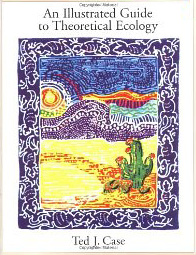 Case, An Illustrated Guide to Theoretical Ecology (read pp. 79-100)
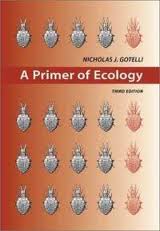 Gotelli, A Primer of Ecology (read pp. 2-85)
Ginzburg and Golenberg, Lectures in Theoretical Population Biology(read pp. 1-5 and 193-219)
Gotelli, A Primer of Ecology (read pp. 2-85)
Ginzburg and Golenberg, Lectures in Theoretical Population Biology(read pp. 1-5 and 193-219)
Exams: Three in-class exams during the semester (only the best two will be counted) plus one comprehensive final, scheduled as follows:  First Exam: 26 Sept.Second Exam: 31 Oct.Third Exam: 5 Dec.Final Exam
NOA 1.102: 13 Dec., 2-5 PM
First Exam: 26 Sept.Second Exam: 31 Oct.Third Exam: 5 Dec.Final Exam
NOA 1.102: 13 Dec., 2-5 PM
Download Samples of Some Old Exams Letter Grade: Your lowest hour exam will be thrown out. Your best two exams will each count 25% of your course letter grade. The comprehensive Final will count as 50% of your course grade. The Final Exam is scheduled from 2-5 PM on Friday, Dec. 13th, 2013 in NOA 1.102. These four exams are the only way to make your grade. No "extra" points are available. No "make up" exams! Final grades are FINAL, carved in stone, and will not be changed. UT's "new" plus/minus grading system will be employed. How to get straight A's Download Class Handouts Download PPTs of Class Lecture notes 
Course Outline, Biology 357: Evolutionary Ecology Background Scaling and the hierarchical structure of biology, levels of approach in biology, domain of ecology, definitions and ground work; anthropocentrism, the importance of wild organisms in pristine natural environments, the urgency of basic ecological research; scientific methodology; models; multiple causality; limiting factors, tolerance limits, the principle of allocation; natural selection, self-replicating molecular assemblages; units of selection. Principles of Population Ecology Life tables and schedules of reproduction; net reproductive rate and reproductive value; stable age distribution; Leslie matrices; intrinsic rate of increase; evolution of reproductive tactics; avian clutch size; evolution of old age and death rates; population growth and regulation -- Pearl-Verhulst logistic equation; density dependence and independence; r and K selection; population "cycles," cause and effect; use of space (vagility, home range, territoriality, foraging tactics); evolution of sex; sex ratio; mating systems; sexual selection; fitness and the individual's status in the population; kin selection, inclusive fitness, reciprocal altruism, parent-offspring conflict. Interactions Between Populations Direct versus indirect and complex population interactions. Parasitism, Commensalism, Mutualisms, etc.; Competition and Niche Theory: Lotka-Volterra equations and competition theory; diffuse competition; niche overlap and competition; niche dimensionality; niche breadth (specialization versus generalization); evolutionary consequences; laboratory and field experiments; other evidence from nature; future prospects. Predation: Theory; predator-prey oscillations; aspect diversity; "prudent" predation and optimal yield; evolutionary consequences; predator escape tactics; adaptive coloration; mimicry; warning calls; coevolution; plant-herbivore interactions and plant-apparency theory; parasitism; Darwinian medicine; selected other observations and experiments. The Role of Phylogenetics in Ecology Phylogenetic systematics, independent contrasts, the comparative method, evolutionary ecomorphology, recovering the history of the vanishing book of life on Earth Community Ecology Macrodescriptors; compartmentation in communities (trophic levels, guild structure, and food webs); connectance; pyramids of numbers, biomass, and energy; energy flow and ecological energetics; secondary succession and transition matrices; community matrix; saturation with individuals and with species; species diversity; diversity of lowland rainforest trees; community stability; types of stability; chaotic attractors; evolutionary convergence and ecological equivalents; evolution of communities; pseudo-communities. Island Biogeography and Conservation Biology Classical biogeography; biogeographic "rules;" continental drift; island biogeography; species-area relationships; equilibrium theory; compression hypothesis; islands as ecological experiments: Krakatau, Darwin's finches, Hawaiian Drosophilidae, other examples; metapopulations, conservation biology, human impacts on natural ecosystems, hot spots of biodiversity, applied biogeography and the design of nature preserves. Click here to go to Pianka Lab Homepage 
Last updated 17 June 2013 by Eric R. Pianka |